Towards a sustainable future: cArtù & TissuePack
Innovation in Packaging – Discover how cArtù and TissuePack are transforming our environmental impact
In the realm of eco-conscious innovation, cArtù and TissuePack are setting a new standard in sustainable packaging. We speak with Antonio Coelho, Director and Partner at C2K Industrie, responsible for strategy, organisation, and the development of the entire product range in the French market.
Tell us a little about the brand, its history, and its markets.
Grifal Group is a leading company in the packaging sector in Italy, operating with Grifal Spa – established in 1969 and listed on Euronext Growth Milan – and Tieng Srl. The Group also includes Grifal Europe Srl in Romania and Seven cArtù Lda, a joint venture with the José Neves Group in Portugal. Grifal Group’s international development strategy involves establishing production centres to meet the demands of different geographical regions, paving the way for cArtù® and TissuePack to become new standards in eco-friendly packaging.
Highlights:
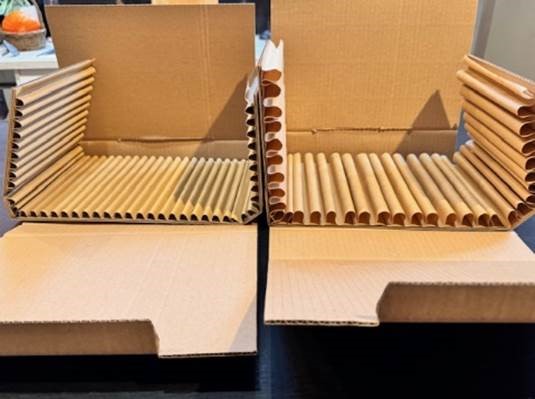
- cArtù®, the innovative corrugated shock-absorbing cardboard, is the best alternative to the most commonly used packaging materials to date, such as traditional cardboard and plastics.
- The development of sustainable technologies that reduce raw material consumption by 70% and CO2 emissions by up to 80%.
- The market sectors targeted by Grifal’s products are numerous, vast, and continuously expanding, also driven by the growth of e-commerce.
In the testing laboratory, packaging for the storage, transport, and delivery of products worldwide is tested and, when necessary, certified according to international standards, including those set by ISTA and Amazon. The online giant has indeed included Grifal, the first company in Italy, in its ‘Amazon Packaging Support and Supplier Network’.
What is innovative or unusual about your packaging?
Grifal is known for its expertise and innovation in the packaging market, designing and producing customised packaging solutions. Thanks to the efficiency of the design team and the testing laboratory, Grifal is able to meet even the most demanding requirements. The company has expanded its offering with innovative technologies and products, including cArtù®, cushionPaper and TissuePack, revolutionary corrugated materials made from cellulose sourced from responsibly managed forests.
There are many aspects of innovation in packaging. One of the key features is the integrated approach, or TCO, which aims to reduce costs and improve sustainability performance indicators by extracting value at every stage of the supply chain, maximising efficiency from sourcing to design, from production to logistics, and through to reuse, recycling, or disposal of packaging, all while using new tools and technologies. Enhancing the unboxing experience for the end consumer and reducing the use of non-recyclable materials are also additional variables, as is the minimalist design, which Grifal strongly considers when making innovative packaging proposals.
How does the design express the brand’s values? What inspired the design?
Packaging design is a crucial element that goes beyond aesthetics, encompassing functionality, sustainability, and interaction with the consumer. Packaging is often the first point of contact between a consumer and a product, influencing the initial perception and the overall brand experience. Well-designed packaging not only enhances the unboxing experience but also needs to be functional and intuitive to improve usability.
An example of synergy between Grifal’s packaging design and the company’s values is found in the principles of minimalist design, such as the production of ever lighter packaging without compromising protective efficiency, and the use of mono-material solutions. Such solutions are not only more sustainable and improve the perception of previous designs in the eyes of the client company, but they also significantly improve the experience for the final consumer.
Retail packaging design focuses heavily on visual appeal and provides information to buyers, while industrial, protective, and/or e-commerce packaging must also take logistics into account, with robust designs optimised for handling, storage, transportation, shipping, and delivery stages.
What technical challenges have you had to overcome to manufacture the packaging, if any?
Product Protection
Protective packaging must ensure the safety of the product throughout its lifecycle, from production to delivery. The solutions must withstand shocks, vibrations, and stresses during transport and handling, especially in automated warehouses. Ensuring this protection requires continuous design optimisation.
Sustainability
In an industry that is focused on reducing environmental impact, sustainability has become imperative. The main challenge is to adopt alternative materials, such as cArtù®, cushionPaper, or TissuePack, that can replace materials like expanded polyethylene, polystyrene, and even traditional corrugated cardboard, without compromising their protective capabilities.
Logistics Optimisation
Packaging design must not only protect the product but also optimise logistics, by reducing the volume occupied and the number of pallets required for transport. The challenge is to create packaging that allows for the maximum use of transport capacities. Furthermore, the design must facilitate shelf placement and picking, eliminating space and time losses.
Production Process Efficiency
Producing sustainable and protective packaging, especially with innovative materials, requires highly specialised facilities. Optimising production process efficiency, by reducing production costs and waste, is crucial for maintaining competitiveness. Producing materials like cArtù®, which combines shock resistance with flexibility and lightness, involves continuous technological improvement and managing a learning curve within the workforce, along with investments in automation and quality control.
Integrated Costs
Optimal packaging management cannot overlook integrated costs. It is essential to reduce hidden costs by maximising value throughout the supply chain. Materials, labour, transport, handling, and disposal are significant cost areas that need to be balanced with efficiency and sustainability. Identifying and reducing these hidden costs requires thorough analysis and the adoption of design solutions that facilitate management and reduce assembly and packaging times.
Regulatory Compliance
The packaging sector is subject to regulations that vary from country to country and require particular attention. Compliance with directives such as those of the European Union represents a major challenge. Therefore, it is essential that packaging not only meets technical requirements but also adheres to environmental and safety regulations, ensuring materials are free from harmful substances and, where possible, recycled or recyclable.
Innovation and Design
In addition to technical and regulatory aspects, packaging must be innovative and well-designed to improve the consumer experience. This includes minimalist, intuitive, and functional design solutions that make product use simple and the unboxing experience memorable.