Luxury packaging: beyond “100% recycled”, where the fibres come from makes the difference
As environmental claims come under closer regulatory scrutiny, what goes into a board is becoming a subject in its own right for luxury brands. Exhibiting at Paris Packaging Week on 3–4 February 2027, Canson, papermaker in Annonay since 1557, sheds practical light on a question many are now asking.
On fragrance cartons, skincare gift boxes and communication materials, “100% recycled” has become a familiar sight in just a few years. It is reassuring, but it doesn’t tell the whole story. Since 12 August 2026, the EU Packaging and Packaging Waste Regulation (PPWR) has applied across the Union, with its main obligations being phased in over the coming years. Since 27 September, the EU’s Empowering Consumers for the Green Transition (EmpCo) rules have also placed tighter restrictions on generic environmental claims where recognised excellent environmental performance cannot be demonstrated. Against this backdrop, beauty, fragrance and luxury brands increasingly need to be able to explain what their packaging is made of, and how it is produced.
Recycled – but from what?
Recycled content can come from two sources. Pre-consumer fibre comes from waste diverted from the manufacturing process, while post-consumer fibre comes from paper used by the end consumer and then collected for recycling. Manufacturing offcuts and other material reused within the same production process, meanwhile, are not generally counted as recycled content under recognised standards. When assessing the environmental credentials of a board, the question is not simply how much recycled material it contains, but where that material comes from.
“Every brand we meet asks us the same first question: your paper is 100% recycled, but in practice, what’s the difference from paper that isn’t? What’s its carbon impact? We need to be able to answer that precisely,” says Eloi Dagnaux, Sales Manager, Digital Fine Art & B2B at Canson.
The whiteness paradox
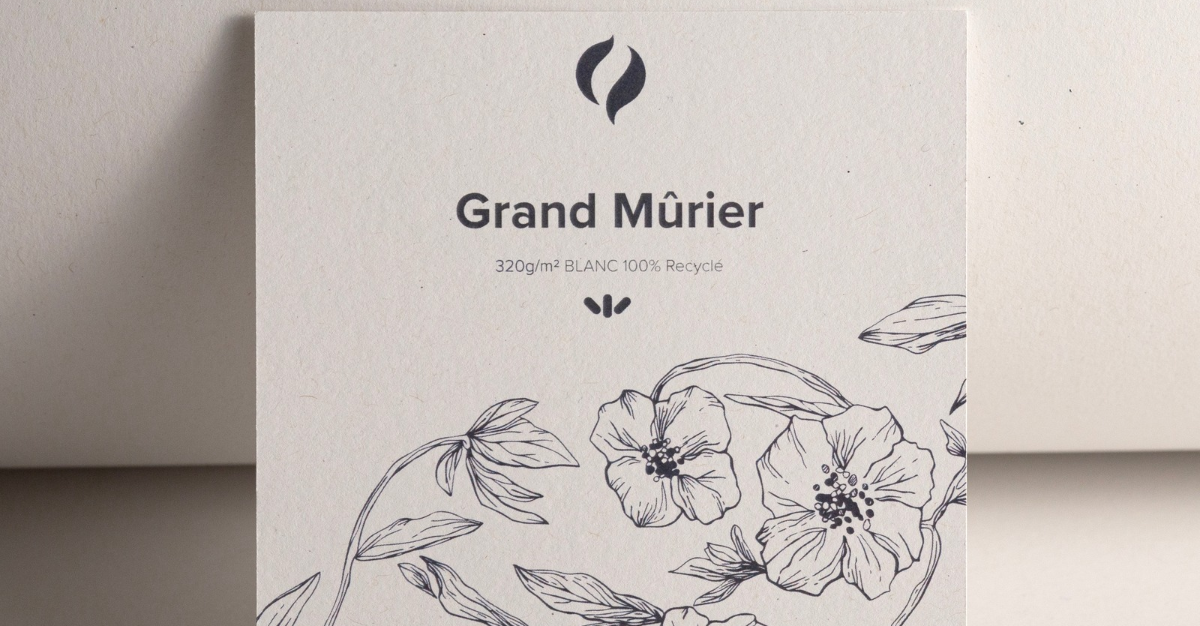
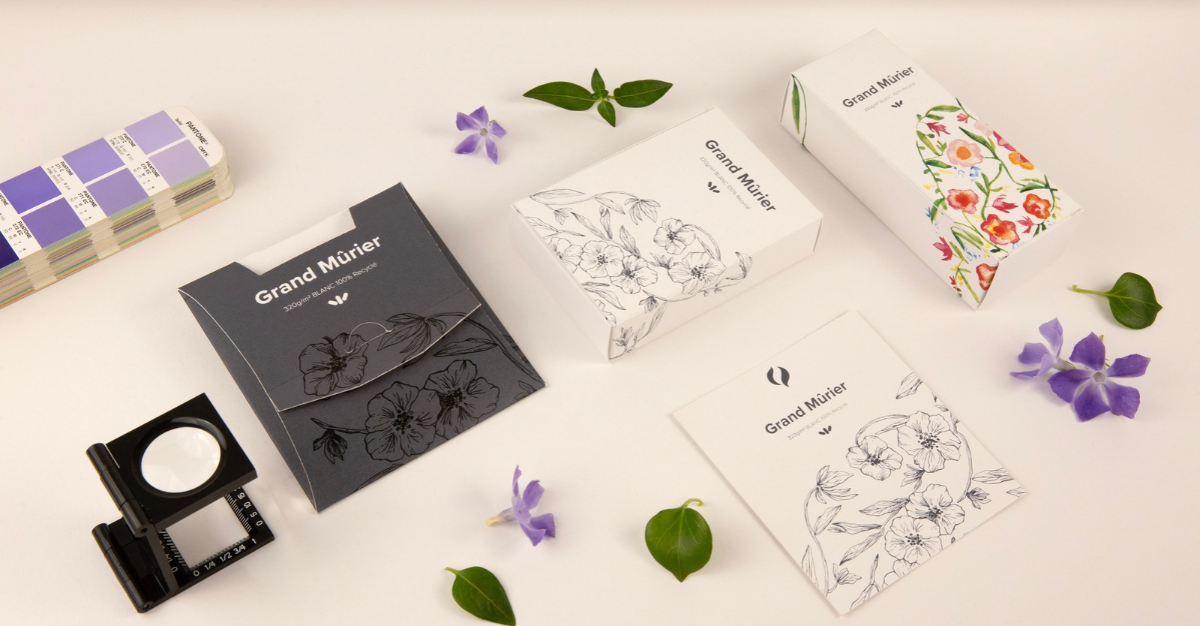
This is the criterion Canson built Grand Mûrier around, named after one of its two historic sites in Annonay. The 320gsm board, FSC®-certified like the rest of the range, is 100% recycled, with a minimum of 60% post-consumer fibre, all collected in France. A partner recovers the paper from businesses within a limited radius and selects it for quality.
Converters know the paradox well: brands want recycled board, but as white as virgin paper. Grand Mûrier retains a high level of whiteness, while occasionally showing a tiny inclusion – a trace of its second life, and one that some houses working to reduce their packaging now accept.
An answer that also lies at the mill
A board’s impact also depends on how it is made. Since spring 2026, the paper machine at Canson’s Annonay site has been supplied with steam by a biomass boiler, inaugurated on 18 September with ENGIE. Running on forest wood chips and shredded pallets sourced within 100 kilometres, it is expected to cut energy-related greenhouse gas emissions by almost 89% – around 5,700 tonnes of CO₂ avoided every year – as well as the site’s natural gas requirements. Water consumption, meanwhile, fell by 60% between 2021 and 2025, and 95% of the water used in the process is recycled.
That leaves the question of cost, in a sector where packaging budgets are closely scrutinised, luxury included. Eco-design often runs into a common assumption: that recycled paper made in France must cost more. “If the price of recycled paper is too high, most projects stick with their usual paper,” notes Eloi Dagnaux. “Our prices are in line with the market average, and sometimes below the imported papers we are compared with.”
Expertise back in the spotlight
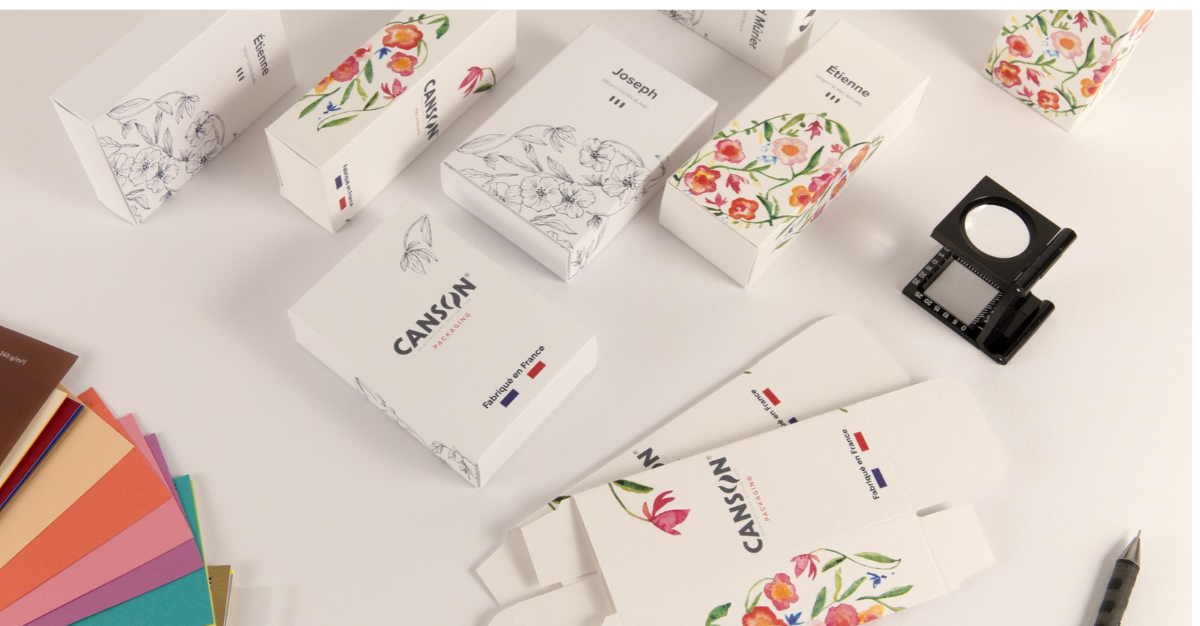
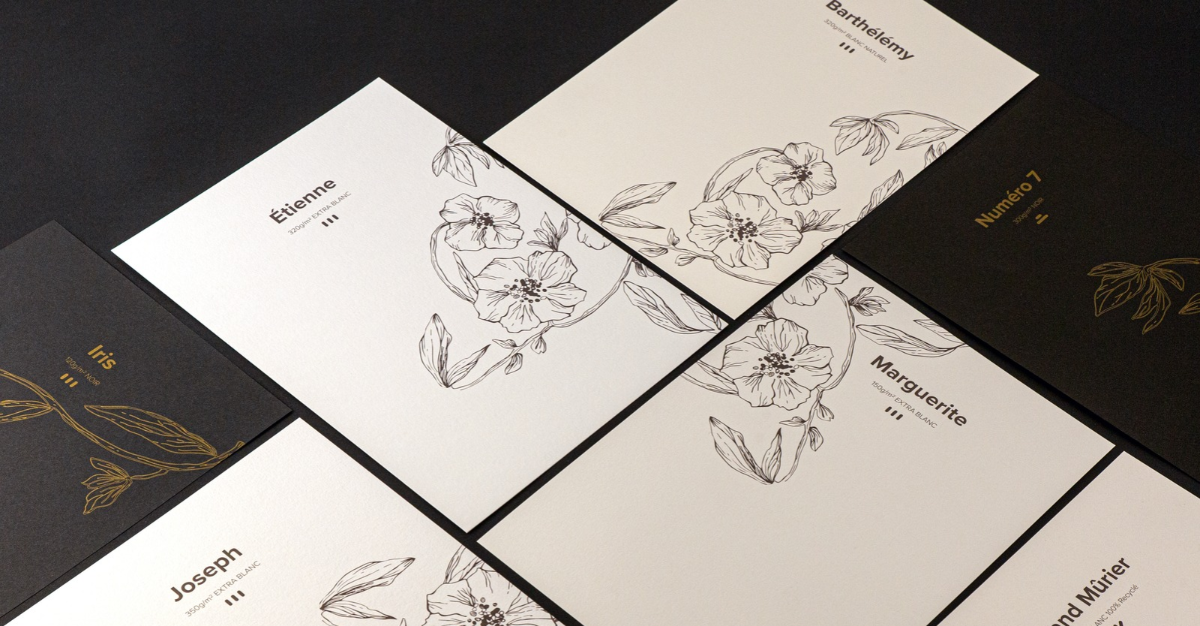
While the Canson name remains associated with fine art, it is less well known that the company has been making boards for luxury packaging for decades. Long sold under other names within the Arjowiggins group, they continued to be produced in Annonay after Canson left the group in 2008, at the request of loyal converters. Since early 2026, they have been brought together as the Canson® Packaging collection: eight boards from 120 to 350gsm, whose names draw on the history of the Montgolfier family – papermakers in Annonay before they sent a paper balloon into the sky in 1782.
Joseph, Étienne and Barthélémy are designed for fragrance and skincare cartons, with Joseph sharing the deep grain of Canson’s fine art papers – a texture that is hard to replicate. Marguerite and Iris cover rigid gift boxes and point-of-sale materials, while the odour-neutral Numéro 7 card is used by perfumers and for in-store scent strips. A Sur Mesure (made-to-measure) workshop also helps brands and converters develop bespoke boards.
“The expertise has always been there. What we want now is for brands to know that a French papermaker, with a history rooted in creativity, makes high-quality boards for packaging,” concludes Eloi Dagnaux.
Canson will present its packaging collection at Paris Packaging Week, on 3–4 February 2027 at Paris Expo Porte de Versailles, stand D162_PLD. Brands, converters and design agencies will be able to see and feel the different grains, and discuss their projects with the team.